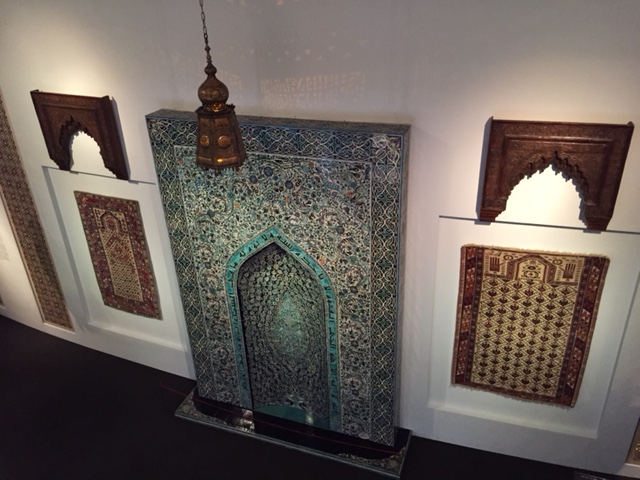
The Museum of Islamic Art in downtown Jerusalem was opened in 1974. It is divided into two sections, the first a compendium of religious works and the Muslim world’s contributions to science, astronomy, medicine, and cultural riches. The second part of the museum is historical from prehistoric times through the various civilizations of the Near East to Ottoman and Mughal art. For those of you in my classes this semester you will recognize some of the symbols, styles, and media of Islamic art both ancient and more contemporary. And for all, notice how this museum attempts to give context to works of art many of which are out of their normal environment.
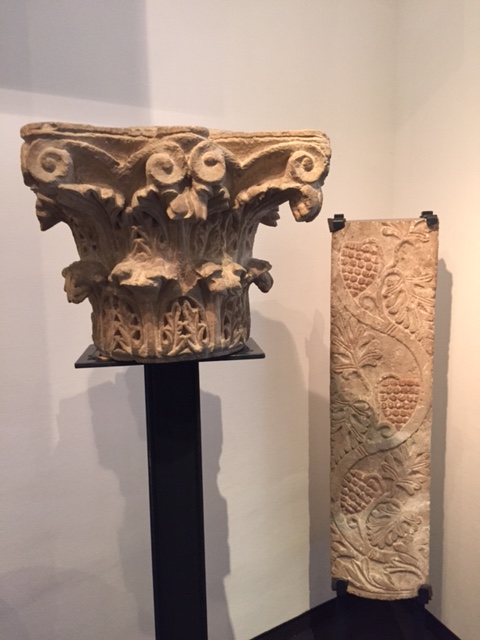
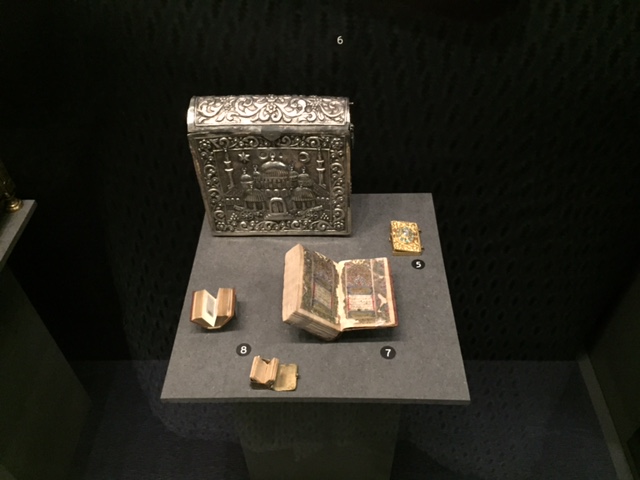
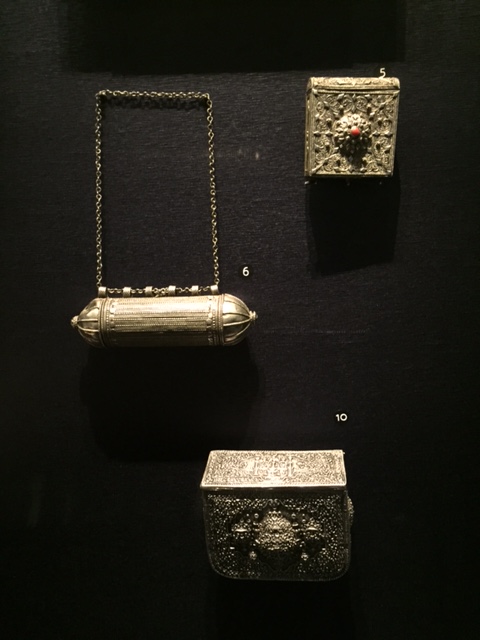
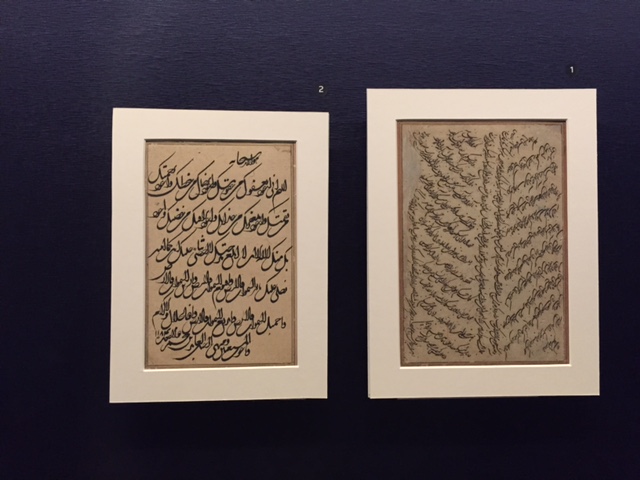
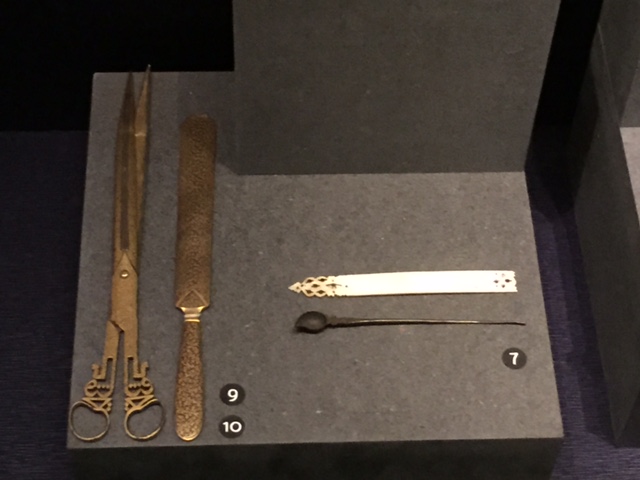
Items for mosques from around the world. In the center is a tiled Mirhab, prayer rugs on either side, and a lamp hanging from above.Umayyad architectural elements from palaces found mostly in Syria, Jordan, and Israel. These come from a palace excavated near Jericho.My favorite piece, Quibla clock that tells one which direction to face for Mecca. This one comes from Istanbul and is dated 18th century.Quran case from 19th century Yemen, small Qurans, and an amulet case from 16th century IranAmulet case from Central Asia (19th century) and a small Quran case with an image of a mosque from Turkey, 19th centuryCalligraphy from Iran and Turkey, 18th or 19th centuryWriting tools, 18th century Turkey including a pen holder, ink well, tiny ruler and spoon made from ivoryDevelopment of science and technology based on the earlier Hellenistic achievements these are glass measuring cups from the 10th century and a tooth extractor from the 17th century IranA medicinal manuscript
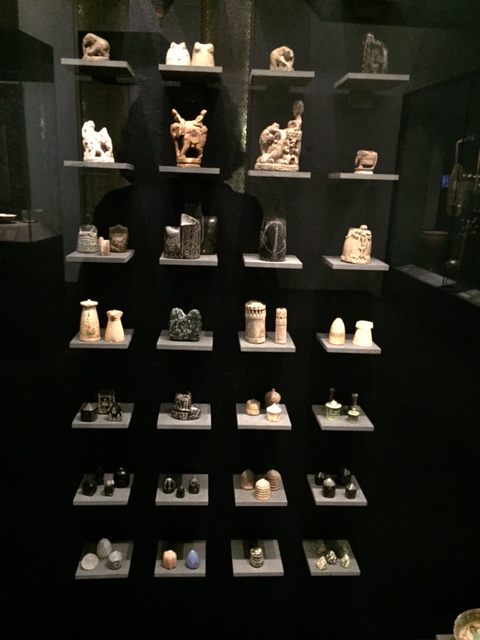
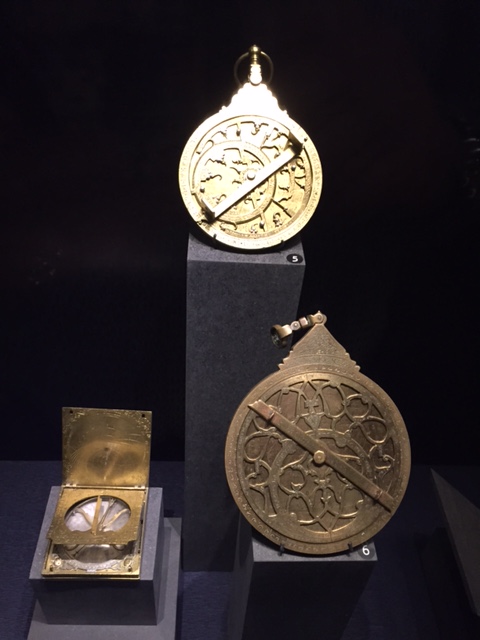
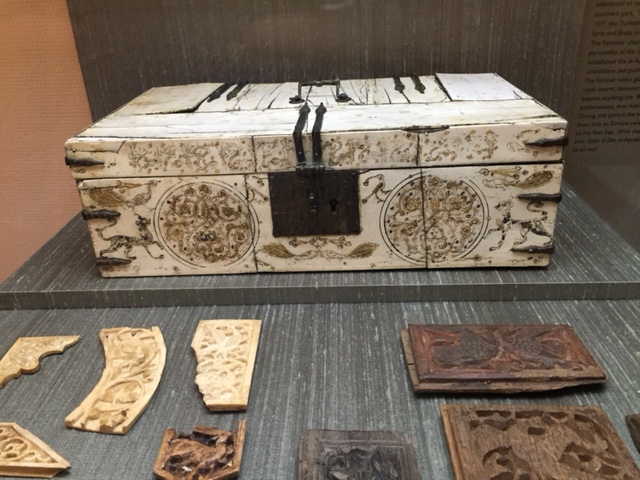
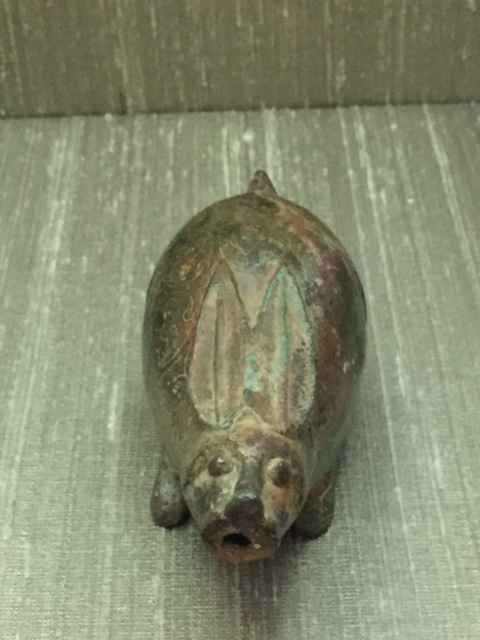
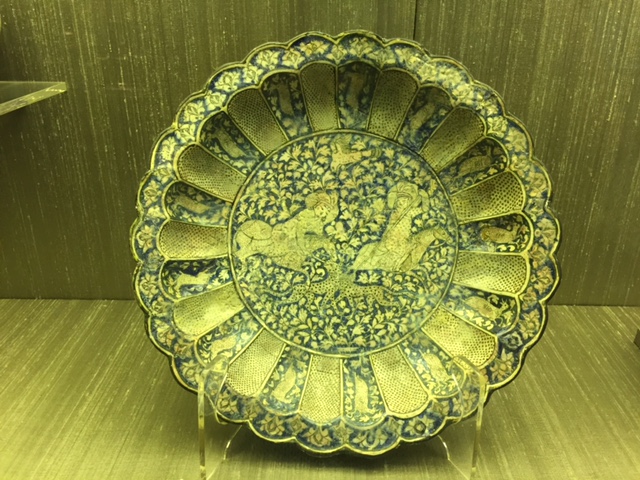
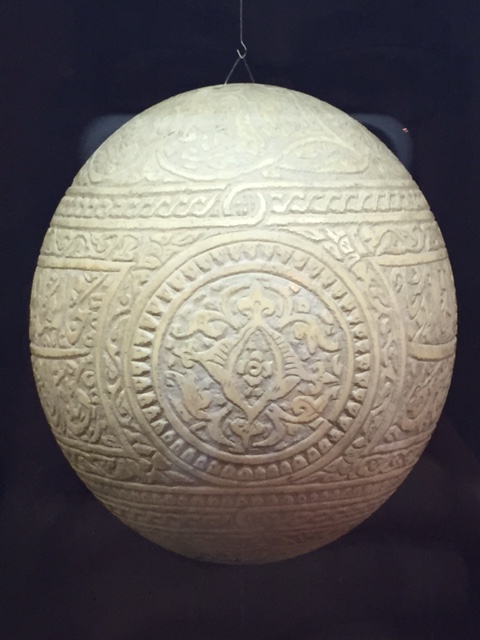
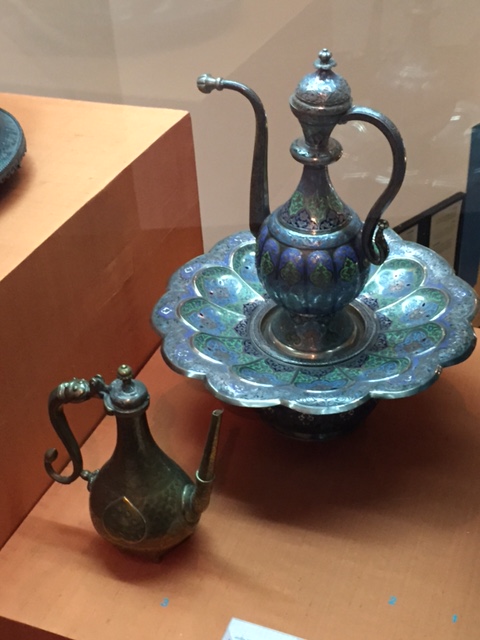
Musical instruments from throughout the Islamic world (Morocco to Spain) and then introduced throughout Europe. Notice the small video in the corner showing some of the instruments being played.Chess pieces: chess has been played in the Near East for over 1000 years. It evolved in India and reached Europe in the 7th century.Detail of chess piecesAstrolabe (to identify East), brass and steel compasses from Iran, 12th centuryCeramics of the Samanid dynasty, 9th-10th century were unique in using Kufic (ornamented Quran script) as decorations around the edges.Rectangular box from Fatimid period. Those of you in Art 1A will be seeing a number of boxes of this type from Europe in the next couple of weeks. It is ivory, painted with drawings from Sicily, 12th century.This was my other favorite piece, a running rabbit figure with long ears and a pig’s face, Egypt, bronze from 11th centurySorry for the greenish cast but you can still see the beautiful elaborate decoration on this dish. It is from Iran, early 14th century.Notice the mongol influence in the faces depicted in this work.19th century Yemenite jewelry: slier, filigree and granulation, coral and amber beads.Photograph posted next to the jewelry case showing a bride splendidly adorned.Manuscript telling the story of the Queen of Sheba from Iran, mid 19th centuryOdd set of porcelain figures: sultans, moors, dressed in European clothing from 18th century- not sure of the storyPainted ostrich eggPainted and lacquered ostrich egg18th century hookahEwer and pitcher from India 18th-19th centuryChest for writing utensils 11th century decorated with hunting scenes.
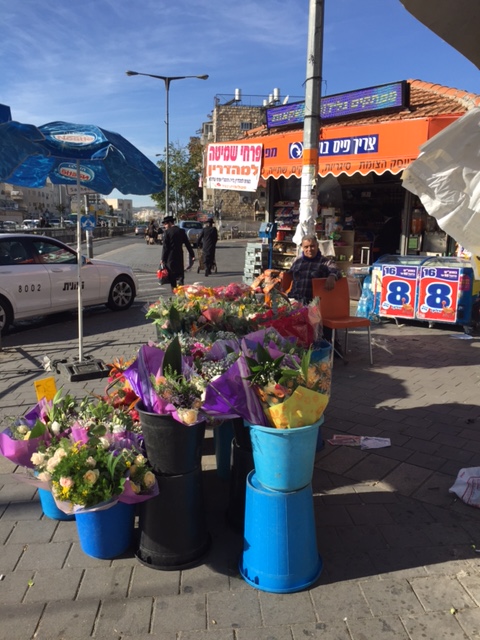
I am in Jerusalem to meet my new grandson who was born Thursday, November 6th the day before I arrived. My daughter and her family live in a neighborhood in Jerusalem called Sandheria, and her immediate surroundings are filled with other Americans living here without their families. This is a neighborhood that most tourists don’t visit and since women who are married cover their heads with hats and/or wigs I’m the only gray haired one around. Here are some images from the neighborhood and a little more afield as we’ve been taking long walks every day.
Balloons for the new baby.Flowers for the new mother.
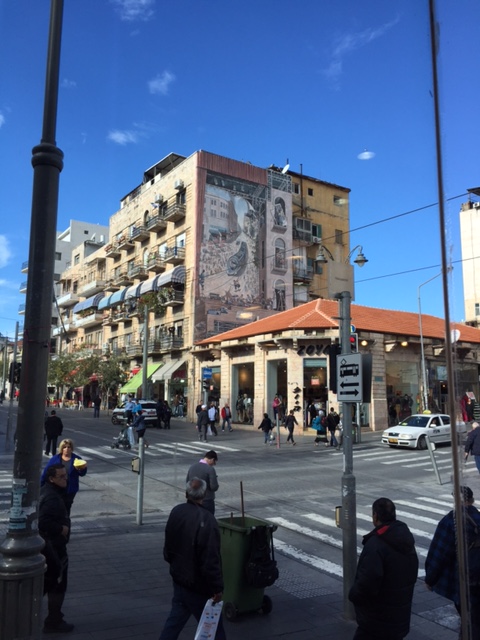
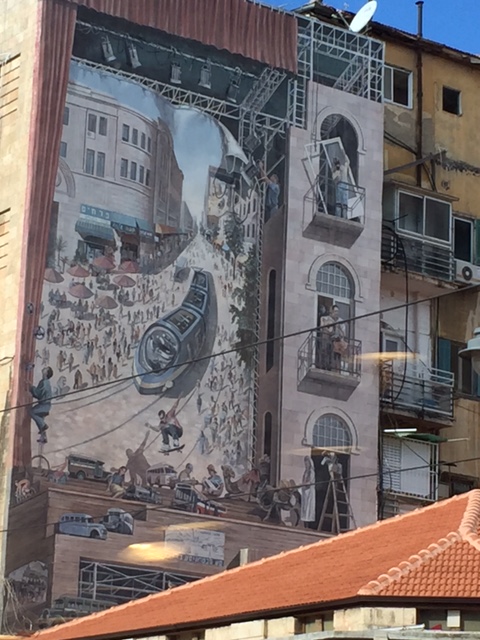
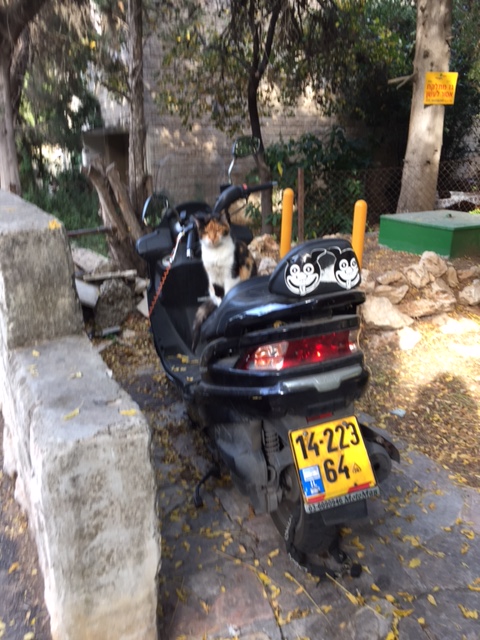
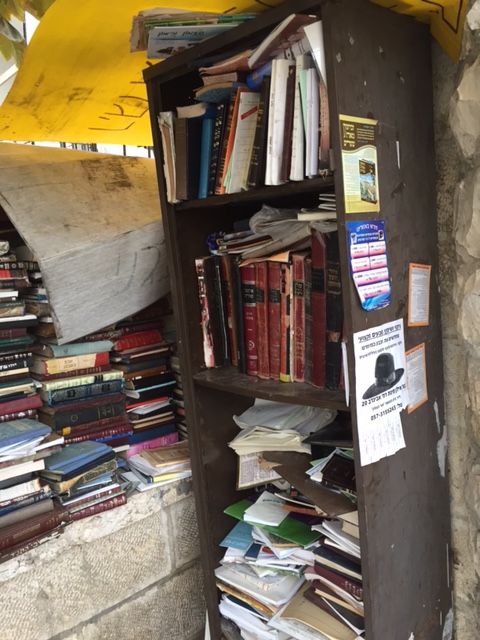
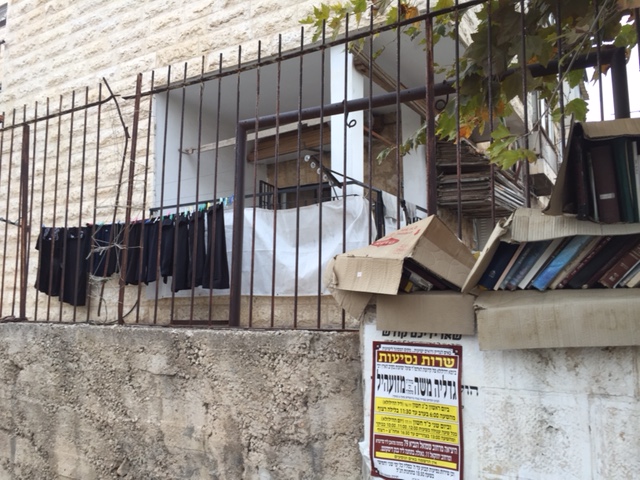
Excellent public transportation and notice that all the buildings are from the same “Jerusalem” stone. It’s hard for us in Northern California to imagine a city built almost entirely from stone.The busiest intersection in Jerusalem. They coffee bar/bakery on the corner makes for good people watching and the great fresco wall mural across the street.Close up of the wall mural.The British brought cats into Palestine at the turn of the 20th century to help with the rodent problem. They did take care of that but now are on their 9th or 10th generation of mostly scrawny and malnourished scavengers. This one looks to be fairly well off.Children go to school 5-1/2 days a week. They are off Friday afternoons and Saturdays. Unlike in the US one sees lots of kids out on their own going to and from school and playing outdoors. Most people in this neighborhood do not have televisions and kids do not play video games so they jump rope, ride bikes, play ball or soccer.Right next to the bus stop is a lending library available to anyone who would like to take one of these books.Most of the men in the neighborhood where black suits and hats with white shirts. Most of the women are also dressed in black. It makes purchasing for a retail store much easier as well as packing for a trip.
Looking out the window in Elana’s (my daughter’s apartment) to Ramot a recent new development on the border with East Jerusalem. You can see how close it is.
This picture is continuous with the last one. Where the buidlings stop is East Jerusalem, the contested area with the Palestinians who view this as their capitol.
Obviously I’m behind on my blog posting as we have been in Israel for a week celebrating the birth of our first grandchild. Will catch up now with blog postings hopefully every few days. On the way here we had 12 hours in Paris and although a little “sleepy” made a visit to the Picasso Museum that has reopened after several years closure to renovate and update.
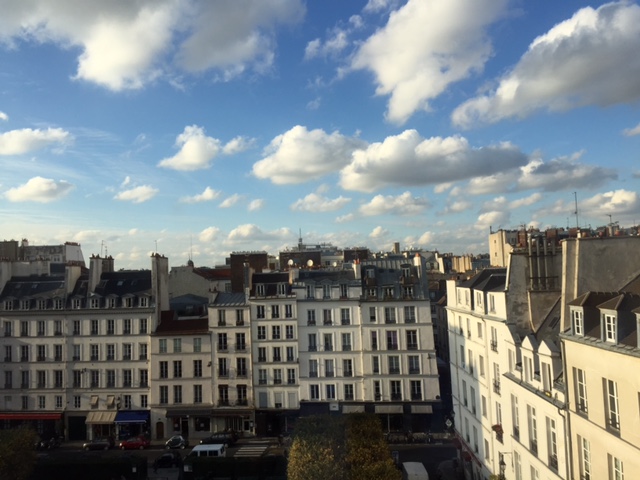
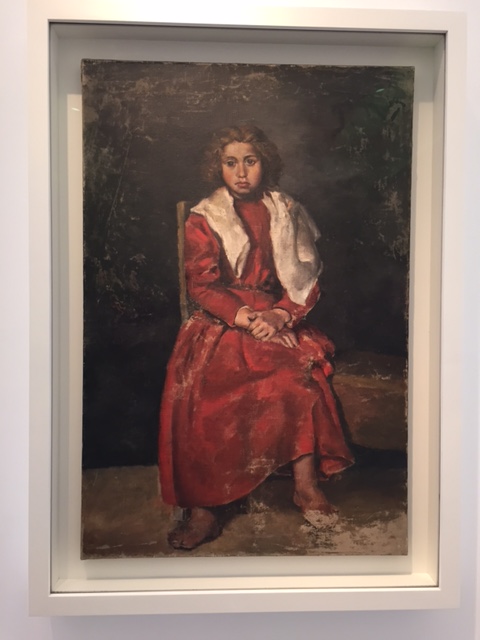
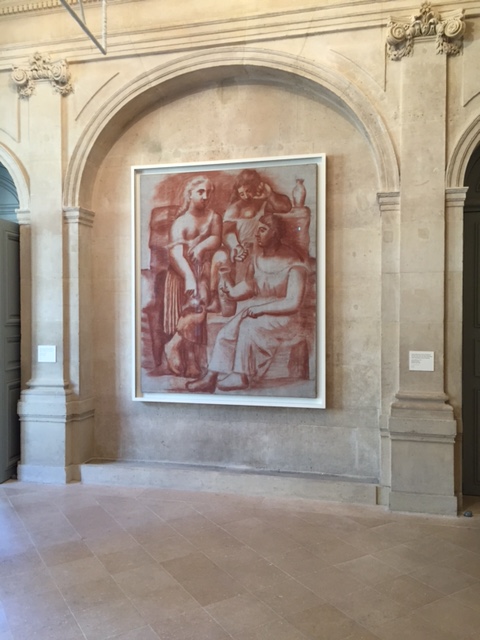
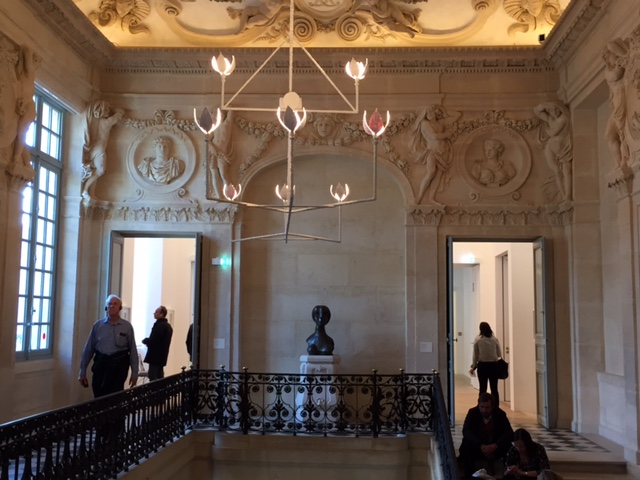
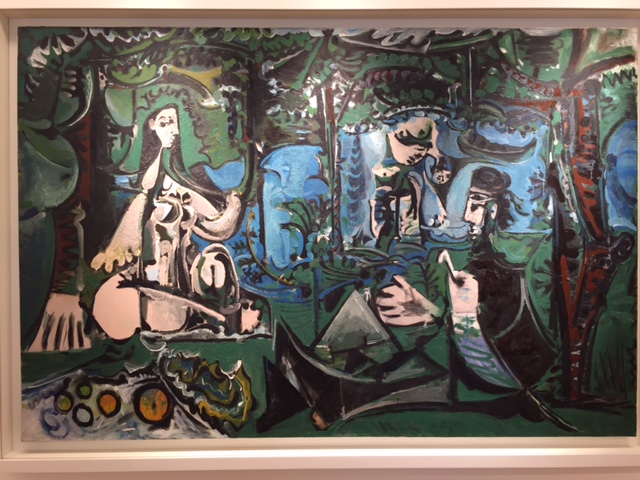
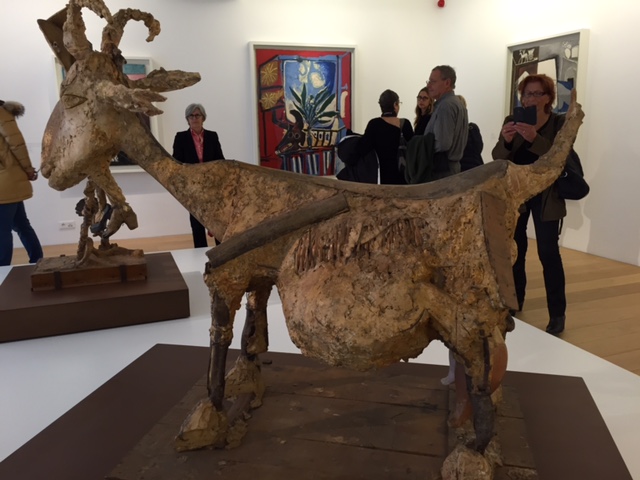
From an upper floor of the museum that is housed in an old palais (palace), Hotel Sale built in the 17th century. You can see a quintessential view of Paris.Portrait of a peasant girl painted by Picasso at age 14!Drawing in red chalk of three women in one of the hallways.The chandeliers are also created by Picasso. Sorry for the distant view but wanted you to see the setting for the work. Different from the usual “museum” presentation.The other side of the second floor landing.A conjunction between sculptural forms and painting. Sleep deprivation kept me from including titles- sorry. As you can see there are traditional galleries as well.This collage occupied an entire wall- a new work to me and completely created from paper elements. Probably 8 x 10′.Picasso’s interpretation of Manet’s “Luncheon on the Grass”. All work arranged chronologically through his career. This painting is from 1961.“Girl Jumping Rope” in bronze, 1950Bronze “Goat”, 1950s
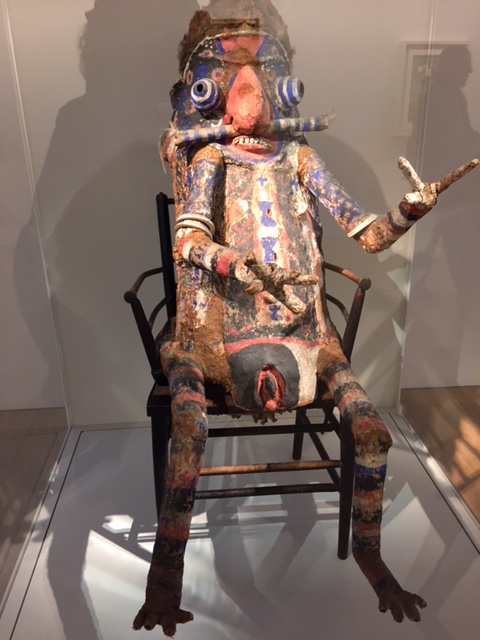
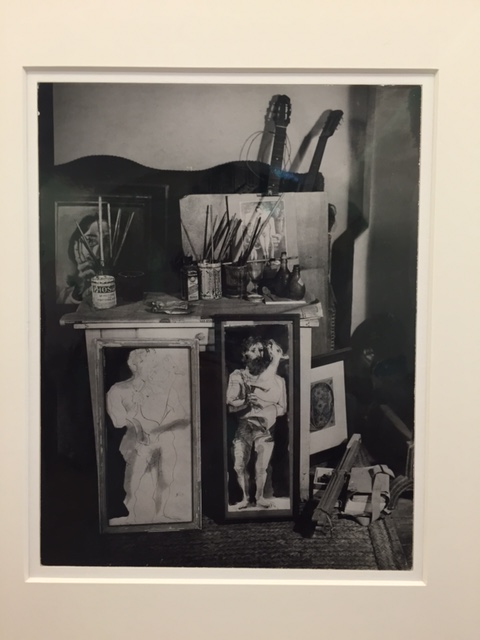
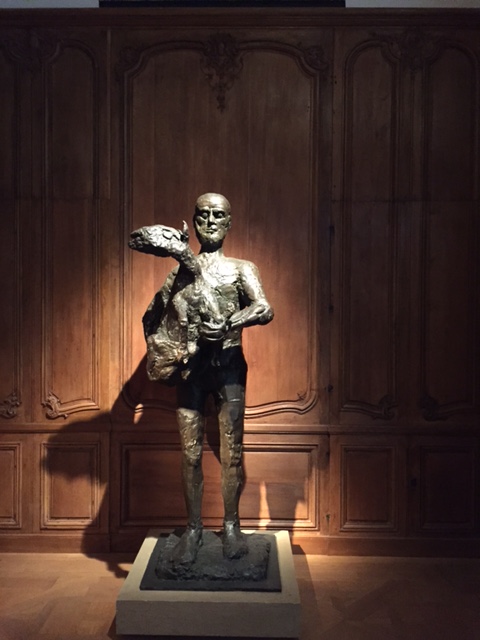
“The Kiss”, an often repeated theme in Picasso’s work. This one was unfamiliar to me and was in the same room with the Yam figure.One whole gallery was dedicated to what was called in Picasso’s time “primitive” art. This work is from Papua New Guinea, a Yam Cult figure. Picasso collected these pieces himself.Another studio photograph by Brassai shows Picasso’s versatility.Brassai, Studio photograph showing the “Man and Sheep” in progress.“Man with a Sheep”, bronze from 1943, during the war years. Much of Picasso’s work at that time was anti-war and it’s amazing he was left alone when so many others were persecuted for their art. Helps to be famous!
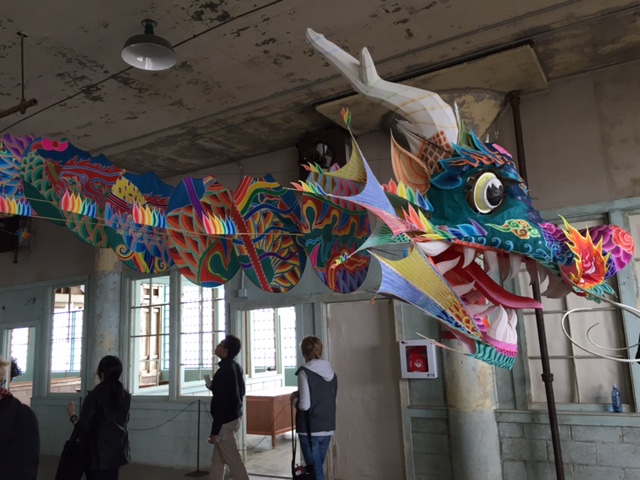
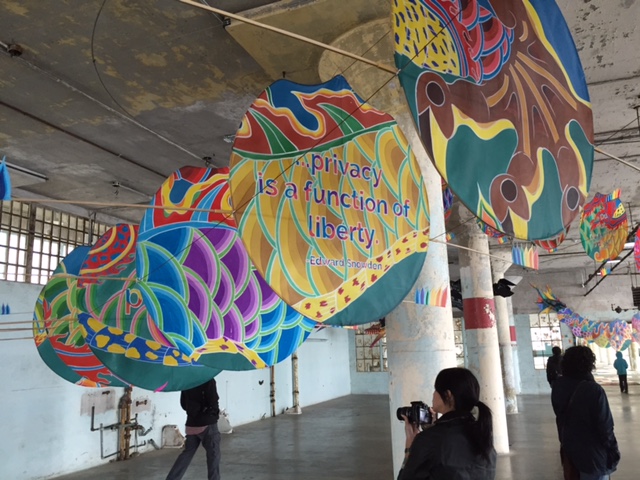
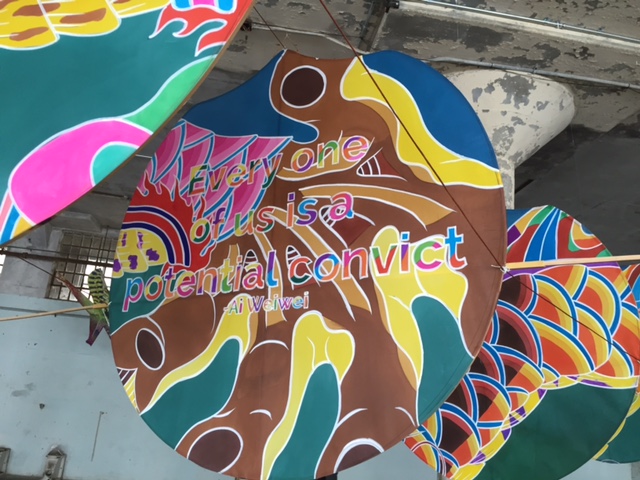
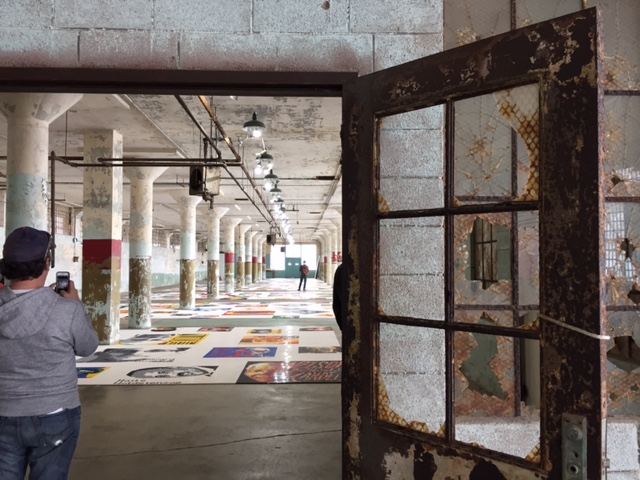
Ai Wei Wei is a dissident Chinese artist who is currently forbidden by the Chinese authorities from leaving the country. He is essentially under house arrest for his criticism of the government, especially about the earthquake in which many schools collapsed killing thousands of children because of shoddy construction. The combination of Ai Wei Wei’s work and Alcatraz, the former prison in the San Francisco bay transforms the space into a theatrical presentation about what it means to be imprisoned especially for “speaking out” and a yearning for personal freedom and freedom of expression. The exhibition will be on Alcatraz until mid April 2015.
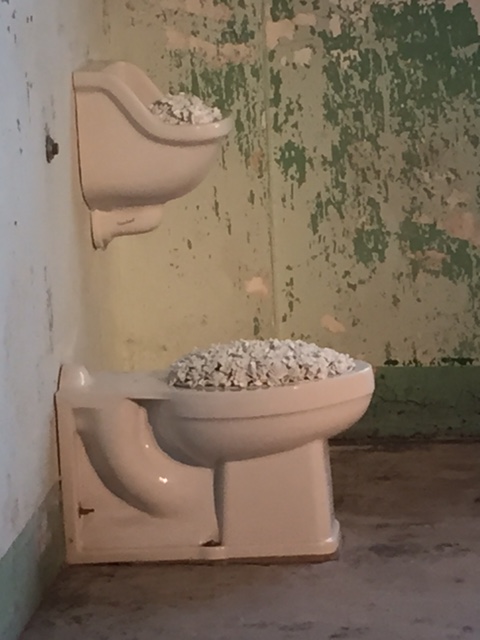
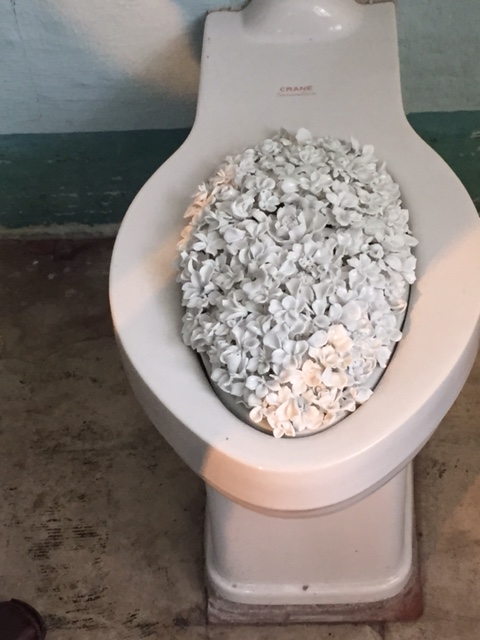
As you enter the first room of the Industrial Arts building you find the giant dragon head of an enormous traditional Chinese kite that occupies the entire space. One thinks about kites flying freely in the air, while this one and other small ones in the room are confined and will never have the ability to fly.“Privacy is a function of liberty”…Edward SnowdenYou can see how this dragon kite fills the whole space. There are quotes from various individuals whose portraits can be seen in the next room.I believe this is the only place where Ai Wei Wei inserts himself directly into the exhibit. “Everyone here is a potential convict.”“Trace” is entered from the smaller space of “With Wind” and is quite a large room. This building was where prisoners could go as a reward for good behavior and here they did repairs, laundry, and probably made license plates.These 176 images were assembled from 1.4 million Legos to Ai Wei Wei’s specifications and were assembled by his studio assistants and volunteers at the Palace of Fine Arts in San Francisco before being transported for final installation at AlcatrazDetailed portraits, divided by region where they have been imprisoned.The majority of the names are Arabic no matter what part of the world they are from. The face you see in the front is Naji Fateel a Bahraini arrested during peaceful demonstrations calling from democracy and human rights in 2012.“Refraction” is a wing constructed out of Tibetan solar cookers. It weighs 5 tons and is confined inside of another section of the Industrial Arts building. It can only be seen from the Gun Gallery.“Blossom” is installed in sinks, toilets, and tubs in the hospital wing of the prison. The flowers are made of traditional porcelain still produced in a village in China.
Close up of the fragile porcelain flowers.The flowers may be a reference to the 100 Flowers Campaign in 1956 in China that was a brief period of government tolerance of free expression.
This is a short video clip of the cell devoted to Pussy Riot, the feminist punk rock protest band in Russia who were imprisoned for a protest song they sang in a church in Moscow protesting against Vladimir Putin. You see here the cells of Cell Block A that in this exhibit are called “Stay Tuned” as each has poetry, music, or a speech by someone persecuted for their expression.
The Chicago River, February 15, 2014. It’s cold but Chicago is delightful in spite of the weather although we don’t have to live here.
“Madame Leon Clapisson” by Renoir, 1883, Art Institute of Chicago. When the painting was taken in for cleaning and the frame removed the conservators found a line of Carmine Lake red paint under the lip of the frame.
Here is a digital rendering of how the painting likely looked when it was completed. Notice how much darker the background is.
This small but informative exhibit included information about Carmine Lake and other naturally based oil paints that are light sensitive. It’s amazing that with the technology we have today, pigments can be so well deciphered and digitally rendered to give us a better idea of what a work like this “really” looked like.
The insects and the variations of color available from mixing them with various binders. Sorry about the poor quality of the image.
Amanda Ross Ho’s monumental head reminds me of Constantine’s head that we will be seeing in about two weeks in Art 1A. Love it in the snow!
Michael Rakowitz, one of the figures in “The Invisible Enemy Should Not Exist”, one of the works looted in Iraq not recovered.
Michael Rakowitz, some of the figures in “The Invisible Enemy Should Not Exist”, one of the works looted in Iraq not recovered.
Part of a tablet looted from Iraq.
I am in Chicago to attend the College Art Association meeting at which I learned quite a bit that I will share with both of the online classes and to visit my daughter. Two of my favorite museums anywhere in the world are the Art Institute of Chicago and the Museum of Contemporary Art. Two exhibits I will share with you are a small exhibit on restoration (more at http://news.medill.northwestern.edu/chicago/news.aspx?id=228036) an installation outside the Museum of Contemporary Art (more at http://www.mcachicago.org/exhibitions/now/2013/330) by Amanda Ross Ho and “The Way of the Shovel” (more at http://www.mcachicago.org/exhibitions/now/2013/324) a different way of looking at archaeology.
First, at the Art Institute, one of the most comprehensive collections of art in the world ranking up there with the Metropolitan Museum in New York and the Louvre in Paris. Currently, there is a small exhibition regarding a Renoir painting that was to undergo some cleaning. When they removed the frame, they discovered a small line of bright red paint under the edge of the frame and after analysis determined that this red was Carmine Lake, an naturally derived pigment that is light sensitive and so had faded over time. In our 1B class we have just been discussing the Mona Lisa and restoration, and in your textbook you should have read a little about restoration of the Sistine Chapel ceiling, and the x-ray of the Arnolfini portrait. Restoration can be controversial at times and must be done extremely carefully. In fact, I should be talking more about conservation rather than restoration as nowadays we do not change anything but learn about an artist’s process and perhaps get inside their head a little.
The Museum of Contemporary Art in Chicago is an interesting museum, as it does not have a permanent collection. Every show is temporary and the themes they choose take you outside of your normal conception of art. This show “The Way of the Shovel: Art as Archaeology” is not at all what you think about archaeology and broadens your thinking on this topic. For those of you in Art 1A we have been learning these last four weeks about works of art that are traditional archaeological discoveries so you will be most interested to see how archaeology can be viewed in a contemporary context. I particularly want to share Michael Rakowitz’s work entitled “The Invisible Enemy Should Not Exist” which features works of looted art from Iraq- exactly the topic we have been discussing in class. The works are paper mache out of Arabic (and I am assuming Iraqi) newspapers. A short video narrated by the curator will take you through the highlights of this exhibit: http://vimeo.com/81746201
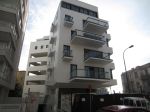
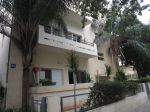
This new apartment building takes its cues from the Bauhaus style of early 20th century Tel Aviv. The only new construction we saw seemed to be close to the beach.
For all the Northern California surfers bet you didn’t know that you can surf at the beach in Tel Aviv though the undertow is pretty intense (about two blocks from where I took this photo)
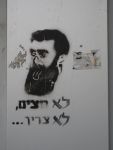
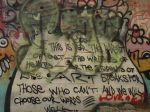
This graffiti says “if you don’t want you don’t have to”. Read it any way you want.
Looks like Banksy has been here.
If you can’t read this it says basically that “art speaks for those who can’t and we choose our words well….”
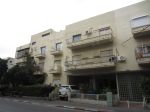
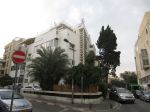
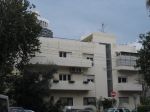
On the walking tour of Bauhaus and International style buildings.
This is one of building that has been renovated. Tel Aviv is a World Heritage Site because of this architecture but of course there is no money for renovating. By allowing two additional stories to be added, it made it worthwhile for the owner to rehab the building.
Originally designed for workers quarters.
The building has an interior garden that is communal space.
The stairwell looks like a thermometer.
Rounded balconies came first with the Bauhaus style in the 1930s but you can find that on many Tel Aviv buildings.
Balconies designed to bring people “out into the world” instead of keeping them inside hidden away.
Many features come together in this building which had been a girls’ school, now apartments and a cafe on the ground floor.
Slits in the balconies designed to bring cool air into the interior. Modeled after Le Courbusier’s ribbon windows.
Flat roofs for spending time outdoors and overhangs over the balcony to provide shade.
An assortment of graffiti on the side of one of the Bauhaus buildings which for the most part seem quite rundown.
Notice the half rounds of the balconies, there are porthole windows over the front door (you might not see them), and a kind of stucco that includes small pebbles.
I think this graffiti is advocating for vegetarianism.
Buddhism or Hinduism?
A Banksy follower.
Our last day in Tel Aviv, we took a Bauhaus architectural walking tour. I’ve included a sampling of the large amount of graffiti as well that we found quite interesting. At the turn of the 20th century most Jews in Israel were living in Jerusalem but a growing number were living on the coast, in Jaffa alongside their Muslim neighbors. As things grew more crowded with increased immigration from Eastern Europe, the city expanded into what is now Tel Aviv with housing but all of the “city” services were still located in Jaffa. In the late 1920s there were riots during which a number of Jews were killed, so the Jewish population transferred enmasse to Tel Aviv and in the 1930s increased their population from around 1200 to 30,000. As you might imagine there was a housing boom.
In the 1920s a school called the Bauhaus School developed in Germany, under the leadership of Walter Gropius. Those of you in Art 1B will be learning about this later in the semester. The Bauhaus philosophy related to architecture as well as design was one of the most influential movements of the 20th century. In architecture Bauhaus made use of reinforced concrete and steel, materials that lent themselves to fast and relatively inexpensive building. This style of architecture shuns ornamentation, is asymmetrical, and is more concerns with space than mass. Vertical and horizontal elements are carefully integrated for functionality.
Tel Aviv has the largest number of Bauhaus buildings in the world, an irony given that the Nazis closed down the Bauhaus school in 1933 as degenerate and many of the teachers and students had to leave Germany, some of them coming to Israel and responsible for designing these buildings. We were disturbed to see how shabby and neglected most of these buildings are. One reason is likely, stucco close to the ocean is probably not a great match.
This was an interesting way to end our sojourn here in Israel. Look forward to seeing or being in touch with most of you soon.
Jaffa port now part of Tel Aviv (called Tel Aviv Yafo), an ancient city that is mentioned in connection with Solomon, Jonah, and St. Peter.
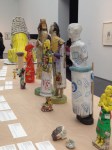
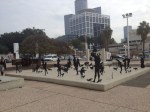
Zadok ben David, Troubles in the Square, 2006, in front of Tel Aviv Museum of Art
Sharon Ya’ari, Bus Shelter front. This artist had a most interesting photography show at the Tel Aviv Museum.
Ya’ari, Bus Shelter back, Tel Aviv Museum. This seems like a non-descript structure though in Israel with the bus going everywhere it’s never a surprise to see one of these shelters in the middle of nowhere. It’s also the place Israeli soldiers stand to catch a “hitch” around the country. An important landmark in rural Israel.
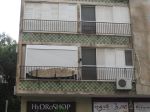
Ya’ari, Hadera Apartment. This too is a quintessential Israeli image though subtle: the window coverings, the type of plant, and the barrenness around the plant. Hadera is an immigrant town with no “sites” to speak of so visitors don’t usually go there.
Gilad Ophir, Shooting Target, 1997, Tel Aviv Museum of Art
Gilad Ophir, Untitled, 2006, Tel Aviv Museum. No explanation included but looks like the way Syrians and Egyptians tried to camouflage their fighter jets.
Rabin Square, where Yitzhak Rabin was killed when he was in the midst of delivering a speech advocating peace with Israel’s neighbors. It’s in the center of town.
This is a preserved graffiti wall topped with the Hebrew word “slicha” meaning “sorry”. I was in Israel in 1996 just 6 months after the assassination and this type of graffiti wall was scattered about the area. Glad to see they preserved some of this energy.
From a cafe on Rothschild Blvd. the artistic hub of Tel Aviv, lots of galleries and many young people in this area.
Lots of fruit juice stands throughout downtown, this one photographed as it started toward dusk.
A hotel along the beach front with two upside down accordion players- have no idea why.
Jerusalem Beach, Mediterranean
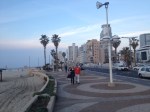
Promenade along the beach. Looks like Florida in the background.
Old and new, cranes just like in Jerusalem but try different style of architecture. Few tall buildings in Jerusalem, not so in Tel Aviv.
The living standard for most Israelis is fairly high and the country withstood the global financial meltdown for the most part. In the 1990s the population increased by over 1 million due to immigration from the former Soviet Union that brought highly skilled (some might say overspilled) immigrants to the country. Many are underemployed and people struggle as prices are high and taxes are an issue as well. It’s a change to be in a country that encourages immigration rather than discourages it and right now the largest influx is from France. We had breakfast today in a small cafe run by a French couple who have been in Tel Aviv for 4 years.
Everything is taxed including food, household goods, etc. and as an outsider you might not even notice since the tax is already figured in to the price. Health care and education are free though many people supplement this to give their kids additional education and pay insurance to have more specialists available to them if they are ill. Some things such as cars, computers, and other imports are astronomically taxed and travel outside the country is taxed as well. People complain about the 18% Value Added Tax (basically sales tax on everything) even though they do get benefits not available to us. Of course, Americans want to have everything but don’t want to pay for it, and there are lots of Americans here so maybe it’s an attitude as well.
In spite of this people are well dressed, there are lots of cars, not much homelessness. Tel Aviv University has a student population of 30,000 and Israel just opened its 5th medical school (in Tzfat). In one of the galleries today there were red dots, the cafes are full, and people have shopping bags. It’s just when you chat with people that they talk about how burdened they feel financially. Ariel Sharon was buried today on his farm in the Negev. Already stories are leaking out in the press about how Sharon was planning to return to the “Road Map” of negotiations after the Gaza withdrawal, unfortunately 8 years ago just before his stroke that ended in his death a few days ago. Perhaps in death Sharon can be a force for moving the peace process forward.
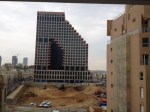
The view of Tel Aviv outside our hotel window. As you can see it’s quite a bit different from Tzfat. Tel Aviv is built on sand as you can see from the construction zone. The Mediterranean is to the right of what you see in this picture.
The port of Tel Aviv has been given over to restaurants, boutiques, and design stores. These are in historical buildings that were part of an exposition in the mid- 1930s.
Yakov Agam, an artist popular in the 1960s created this fountain in the center of downtown Tel Aviv.
A meeting of the minds at Tel Aviv University.
This moving sculpture is called “Eternal Repitition”. The caption for the work says “Three things intrigue us when relating to Jewish cultural heritage. The cycle of time, the wrong hand capturing time and events. The deleting-hand that attempts time and again, to erase heritage.
This moving sculpture was created by Michal Bar-oz and Ifat Moor at Tel Aviv University “Museum of the Diaspora.”
Interesting project brought together families to create squares to depict “what your family is made of”.
Detail of some of the squares.
Museum of the Diaspora entry model of the inside panel on “Arch of Titus.”
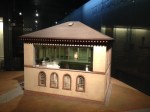
Sardis Synagogue, Turkey 3rd century (model)
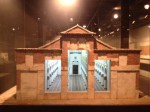
Prague Synagogue, 13th century (model). This synagogue is still active
El Transito Toledo Synagogue, 14th century (model). Has been converted to a church.
Kai Feng Synagogue, China 13th century
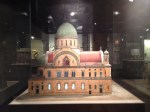
Florenece Italy Synagogue, 19th century (model)
Touro Synagogue Newport Rhode Island, 18th century (model) oldest synagogue in North American
Frank Lloyd Wright, Beth Shalom Synagogue, Elkins Park PA, 1959 (model)
Synagogue Ceiling from Chodorow Galicia./Ukraine, community destroyed in Holocaust.
Grandpa Tzaki and his granddaughter in Ramat Gan. They are Facebook friends, love spaghetti Bolognese, and love the movies. Tzaki was a film producer until he lost his son in the hotel bombing in Taba (Sinai Peninsula). Grandpa and granddaughter have taken a “roots” trip to Poland.
Grandpa Dovik and gradnson Amit are posing in Kiryat Ata. Grandpa retired from Rafael (Advanced Defence Systems) and now spends time taking his grandson to soccer games and is Amit’s #1 fan. Dovik describes his mother being taken to the hospital in the back of a truck used to transport cows to give birth to him. Grandpa wishes for peace and grandson wishes for equality.
Grandpa Merhav lives in Hadera. He is a tour guide and this is his granddaughter Adi who studiens dance. For her Bat Mitzvah this year the family will travel to Jerusalem and Grandfather and Granddaughter will be tour guides. Grandpa remembers sneaking into the old city as a child.
As you can see Tel Aviv is a total opposite of where we’ve been up to now. It’s a city of 400,000 with a metropolitan area of over 3 million along the Mediterranean coast. It reminds one of New York or Miami. Just as Jerusalem is the heart of the religious communities in Israel, Tel Aviv is the heart of secular (sabra) Israel. The city was established on the sand just north of the ancient port of Jaffa in 1909. By 1950 they were one large city. Downtown Tel Aviv is lively though we haven’t seen many tourists this whole trip. It’s a very young city, lots of young people especially in the bars at night. The Tel Aviv port has been given over to restaurants and shops many of which are housed in buildings refurbished from international trade fairs in 1934 and 1936.
We visited Tel Aviv University at the northern end of the city where we saw the Beit Ha’Tefusot (Diaspora Museum). This is a museum that focuses on the worldwide Jewish communities and Jewish history outside of Israel. It is located on the campus of Tel Aviv University, the largest university in the country.
We saw the permanent collection which contains a number of models of synagogues around the world, some of which will surprise you. An interesting photography show featured elders born the year Israel got its independence with their grandchildren or other young children and how they relate to one another.
Tzfat is quite hilly and divided into quarters with very narrow streets. All the buildings are stone and you see lots of turquoise as this is considered a mystical color to ward off evil spirits.
Many religious Jews come to Tzfat for Shabbat and during the spring holiday of Lag B’Omer the city swells from 30,000 to 100,000 people with every bit of floor space or mattress occupied.
Most people never see the citadel, choosing instead to wander through the artists’ quarter.
As you can see from these trees, the snow that fell here about 3 weeks ago created quite a bit of damage. They had 20 inches of snow in a few days- a record.
In more recent history Tzfat was the home of both Jews and Muslims in the 20th century and we are looking down at the steps/road that separated the two communities. Now it is entirely a Jewish town.
Sandwiched in the middle of these buildings you can see a fortified pillbox with a searchlight on top that monitored the steps you just saw.
This is the former British Police Station that the British abandoned, giving the 1200 Jews then living in Zsfat one day notice that they were going and then handed the station over to the Arabs who outnumbered the Jews 10 to 1. The Jews would not abandon their homes and a fierce battle ensued.
You can still see the pock marks from weapons used to try to take the Police Station.
Ultimately the Jews of Tzfat prevailed with outside help from the Haganah (first Israeli army) but with a great loss of life. The odd looking building you see in the middle background is also a remnant from that time and has plaques commemorating the bravery of those who lost their lives.
This is what is known as a “Davidka” an odd looking weapon used in the Israeli War of Independence in an interesting way. My dad who fought in the War of Independence also told us stories about these odd weapons. They were not very accurate and there was a shortage of ammunition so the ‘”story goes” that setting it up on a pile of rocks made so much noise it scared people away.
Notice the drum on the roof- that is to collect and heat water (solar). This is an example of a courtyard in the Artists’ quarter of Tzfat.
Musicians abound and the music is decidedly Middle Eastern and “soulful” Jewish. Rabbi Shlomo Carlebach who was a musical rabbi has had a big influence on Jewish liturgical music. The tunes are likely familiar to people who attend synagogue without even knowing where it came from.
This is a “Tzedakah” box embedded in the wall. “Tzedakah” literally translates at “righteousness” but most people understand it as meaning charity.You are invited to insert coins as you pass. You find these all over the country though none as embellished as these.
This is the original home (rebuilt into the Ari Sepharad synagogue). The Ari is the name given to Isaac Luria one of the most important Kabbalist (mystical) teachers in Judaism who came from Spain. He only lived to 38 but had an enormous influence on mystical Judaism.
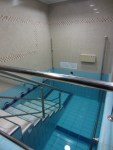
We had the unexpected treat of being able to visit the Mikveh (ritual bath) for women in Tzfat. Our tour guide was our innkeeper who does the tour for groups who are not familiar with the rituals associated with the baths.
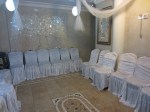
This is the henna room of the Mikveh, especially used before weddings.
Another view of the henna room.
The wedding room, just outside the bath for the bridal party to gather.
Women submerge in the bath after their menstrual cycle, at the beginning of the new month, and before important holidays. Men also partake but in a separate facility.
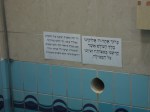
The prayers a woman says before and after submerging. They also had facilities for disabled women though this city is so accessibly unfriendly that I’m not sure how they would get there.
Looking up the hill you can see multiple layers of this city.
We aren’t used to seeing young children off playing by themselves, but here in Israel one sees that all the time, even in the big cities.
Israel is such a diverse country, one of the groups being Yemenite Jews who came here in the 1950s and early 1960s. This stand in the Artists’ colony makes Lachuch, a version of the wrap. Quite yummy.
As Shabbat approached Elana and Yakov were making their last “placements” for people in Jerusalem to have a Shabbat dinner. Now they could truly relax.
How many different ways can you spell the name of a town? Obviously many ways, since this is a transliteration of a Hebrew word. You might thing there are many different Tzfat cheese factories but there is only one, though signs directing you there spell it many different ways. Tzfat is one of the four holiest cities in mystical Judaism. Tzfat represents air (high on the mountain), Tiberias represents water (Sea of Galilee), Jerusalem represents fire (the Temple), and Hebron represents earth (where the Patriarchs and Matriarchs of Judaism are buried). There are few references to Tzfat in ancient sources until one gets to ancient Rome, when Tzfat was a garrison in the Jewish War against Rome in the 1st century. It is mentioned in the Talmud as one of the hilltop fire beacons (the first attempt at sending an email blast) where letting people know what the date was for the new month or a holiday was communicated by lighting a bonfire on the tops of mountains strung from north to south through the country.
The Crusaders were here because of the strategic location but Tzfat really began to develop as a mystical site in the 15th and 16th centuries after the Jews were expelled from Spain and some of the most brilliant scholars of the time came here. Tzfat has suffered from plague and several earthquakes, the last in the late 1800s. Today Tzfat suffers from some of the same problems as Nazareth, dependent on tourism but the visitors only stay a few hours mostly. The current mayor is trying to do something about that and there is a huge Klezmer festival now in late August and a newly established medical school. Recently the regional hospital has been sending in volunteers clandestinely to bring casualties out of Syria (only 20 miles away) to give them medical attention they obviously can’t get in Syria.
Having Shabbat in Tzfat was a magical experience and we truly got a rest. Everything shuts down at 2 pm on Friday and the tour buses are gone, the shops selling art that makes Carmel, CA. look cutting edge are closed, and the streets turn to pedestrian malls. We wandered and ate and napped and prayed. It was great and now we are off to the opposite- the hustle and bustle of Tel Aviv as we begin our reentry into our lives.
Courtyard of the hotel- this was once a house in the Arab quarter abandoned probably in 1948. Most of these houses have an inner courtyard and you can see how the inn was modernized. There have been a number of earthquakes over time in this area (last one late 1800s) and stones have come from various buildings in restorations.
To give you a geographical sense here in Tzfat we are 8 miles from the Lebanese border and 20 miles from Syria and 20 miles from Jordan. We are closer to Damascus than Jerusalem and closer to Baghdad than Eilat.
Just like in California one person is working and two are “supervising”.
We are staying and exploring in the old city (artist quarter) of Tzfat, very beautiful and mysterious.
Tzfat is kind of crazy place- no idea what you might encounter. The balloon in the middle says “Also Free Money” and the link at the bottom has a little dog and say “Lick” instead of “Like”
This store gives you all- the art makes Carmel, CA. look cutting edge but hey, this is a tourist destination. Just as in Mendocino people want to take home a seascape, here they’d like to take home a Galilean landscape or the portrait of a rabbi, or a hamsa.
Lots of shopping opportunities and we did. This store’s merchandise looked more interesting than most.
Check out the surfing rabbi!
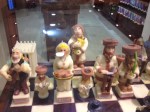
The Safed (Tzfat) candle factory had amazing wax sculptures in addition to the actual candles. This chess set featured the Hasidim (one sect) vs. the Litvishe (my son-in-law). So the building in the corner is a replica of the Rebbe’s home in Brooklyn and there is an actual building that is rebuilt to look exactly like his home in New York for when he returns from the dead. The buildings are the castles. The figures all have wicks on their heads.
Here are the Hasids from the front- the Baal Shem Tov is in the front and Shlomo Carleback is cut off on the left.
Here you see the Litvishe side with Rav Kook and
The castle on the Litvische side is the Mir Yeshiva (the Harvard of Yeshivas) where Yakov studied before he got married.
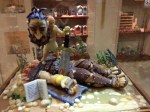
Samson….
David and Goliath
Noah’s ark: back says “HMS Don’t Ask for Directions”
The Temple in Jerusalem
Elana and Yakov have joined us for three days and it’s great to have them back. We’ll be together over Shabbat in Tzfat which reminds all of us of a combination of our own little village of Mendocino and Berkeley. Pretty easy going and seems as though people, no matter what their persuasion are sympatico to others around them. I’m especially drawn to the little children and the under 3 boys as traditionally they don’t get their first haircut until they are three years old. You just want to cuddle with them unless they are having a tantrum on the street which also happens. We had our first day of “weather” with a bit of rain and it’s fairly cold here (at altitude) but I think those of you in California would be craving the moisture and those of you in the rest of the country would probably say we were wimps to be cold at 48 degrees.
Since it was Thursday, when we first reconnected both Elana and Yakov were busy making arrangements for people to have Shabbat dinner in Jerusalem. They are usually hosts themselves so they’ve had even more people to “place”. We are going to someone’s home for Shabbat dinner in Tzfat- will let you know more about that after Shabbat is over.
Something unique about the community they live in, is how much people help each other. Elana and Yakov just moved into a new apartment and of course one needs boxes for moving so they went to a moving box gemach to borrow boxes and then returned them when they were finished. A gemach is a service that one offers just because it’s something you have that you can share or a skill you have that you can share. There is no money exchanged. Some examples are the snake catcher (snakes get into people’s houses/apartments) who is an expert at catching them and you call him in when you have the problem, the chair gemach if you need extra chairs for a party or a dinner, the sea sickness gemach for a person who has expertise in that field.
When Elana and Yakov moved (the day before we arrived) a friend lent them their car, a few of Yakov’s study partners moved everything (for the price of some pizza) and the old neighbors sent their kids over to help when they got home from school. They only moved down the street a block or two.
When we were at Friday night services at the Kotel (Western Wall) there was an American man who lives in Jerusalem who makes sure everyone who wants has a place to go for dinner. Elana told us he finds dinners for 100 people every Friday night. They are one of the places people often go. He is wealthy enough that he also helps with scholarship money for people (like Elana) who want to come to study in Israel for short periods of time. There is a rabbi who is also a physician who advises people where to seek help from specialists he knows have the expertise or would suit the patient. He does this for no payment.
When we walked through the market in Tzfat we met a lovely young woman originally from Australia, working in one of the shops, wanted to be sure we had a place for Shabbat dinner and when she and Elana chatted they exchanged numbers in case Elana and Yakov want to come back to Tzfat or she wants to come to Jerusalem.
We are looking forward to our Shabbat experience here in Tzfat and are staying in a lovely inn in a converted house estimated to be about 200 years old. The hosts are a couple from Montreal who moved here about a year ago with their two children. They remind us of some of our neighbors and we feel very at home here. They told us a bit about Tzfat and we’ll be taking a walking tour with them later this morning. We are planning on going to the Carlebach shul for services this evening.



























































 Poetry Without Words