Some museums can always be depended upon to have at least one exhibit that is outstanding every visit. The Israel Museum in Jerusalem is just that kind of museum. It’s always unexpected how interesting an exhibit can be. I didn’t have too much enthusiasm for this show before we got there but it was fabulous. I think you’ll agree. Especially, in a part of the world where people have such a hard time getting along it’s amazing to see how much we as humans have in common and how long we have been human. The show was called “A Brief History of Humankind” and brought together works from the museum’s collection of archaeological treasures to their cutting edge contemporary art collection.
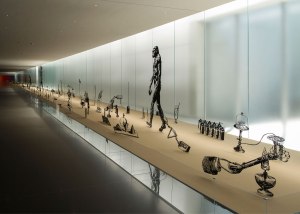
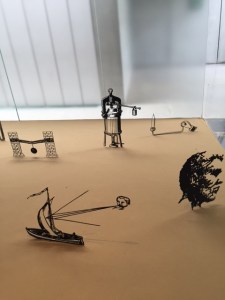
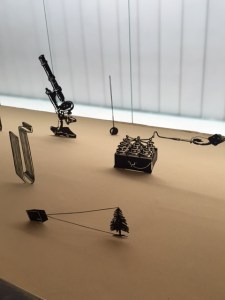
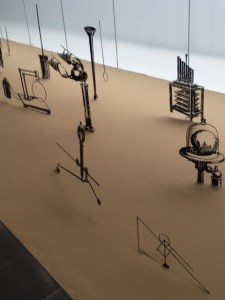
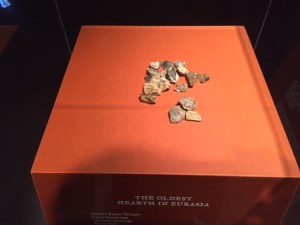
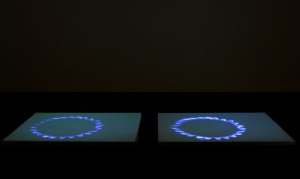
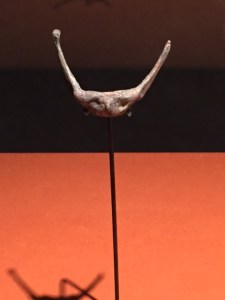
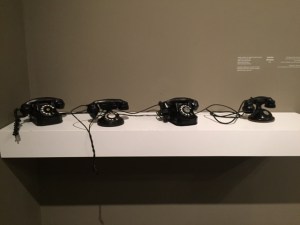
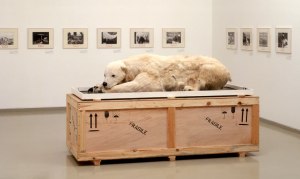
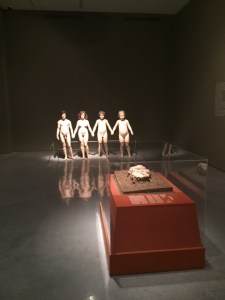
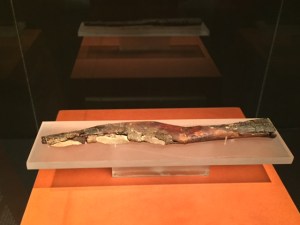
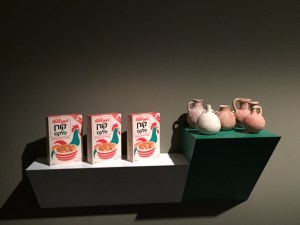
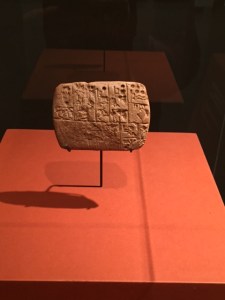
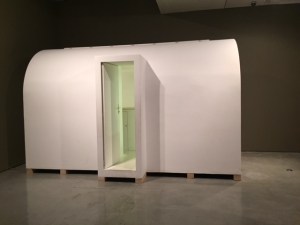
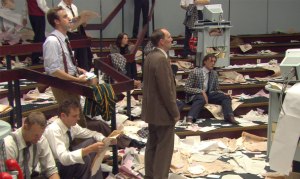
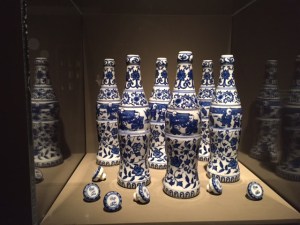
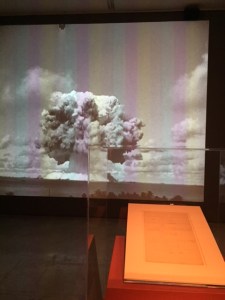
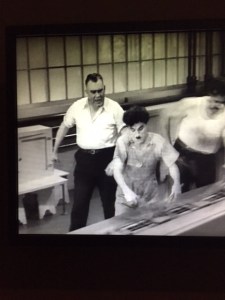
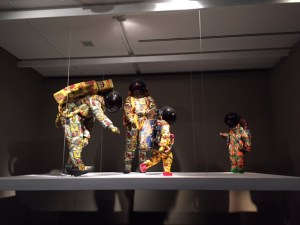
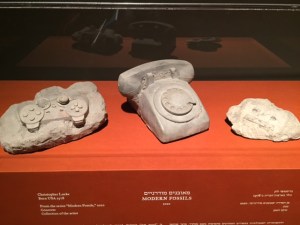
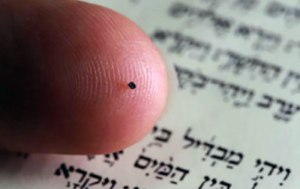
“Evolution and Theory”, Zadok ben-David, 1998, hand cut aluminum at the entrance to the exhibitDetail, “Evolution and Theory”Detail, “Evolution and Theory”Detail, “Evolution and Theory”Detail, “Evolution and Theory”In the Beginning Fire: Burnt flint from the oldest hearth in Eurasia, early stone age“Blue Gas Eyes” Miroslav Balka, 2014, video, salt, steelCognitive Revolution: Hyoid Bone, Middle Paleolithic Period. The hyoid bone is a horseshoe shaped bone in the middle of the neck which anchors the tongue muscles as well as some of the neck. In 1989, the journal “Nature” reported the discovery of this particular hyoid bone at Mt. Carmel belonging to a Neanderthal human proving that Neanderthals could speak.Janet Cardiff and George Bures Miller, Installation: telephones and audio recordingsSurvival and Extinction: “Ursus Maritimus”, Mark Dion, 1995, fiberglass, goat skin, glass eyes, art crateThe Family: Charles Ray, “Family Romance”, 1992-95, mixed media and Plastered skulls in the foreground 9000 BCE all found together in a family burial.Agricultural Revolution: the oldest complete sickle in the world, 9000 BCE, horn, flint, and resinHaim Steinbach, “stay with friends 2”, 1986, wooden shelves, Kellogg’s boxes, and bronze age potteryLaw: Administrative account inscribed with cuneiform, ca. 3000 BCECity and House: Model of a House, pottery, early bronze age, 3000-1600 BCEAbsalon, “Cell No. 1”, 1964, wood, white waterproof paintSilver Hoard, late 11th century BCE“Middlemen”, aernout mik, 2001, single channel video“Benedictine Arias Montanus, engraving, Maps of the Holy Land, 1572“Kekou-Kele (Six Pack)”, 2002, Zhang Hongtu, porcelainIndustrial Revolution: Bruce Conner, 1976, “Crossroads”, video and the original Theory of Relativity manuscript by Albert Einstein.“Modern Times” Charlie Chaplin, 1936The Future: “Vacation”, Yinka Shonibare, 2000, installation“Modern Fossils”, 2010, Christopher Locke, concreteIn another part of the Israel Museum is the Shrine of the Book that holds the Dead Sea Scrolls. This building is hydraulic, able to sink into the ground if attacked. A temporary exhibit of the smallest bible ever produced was very interesting.That speck you see (about the size of a grain of sugar) is the new Nano Bible, containing 1,200,000 letters etched, created by the Technion. It’s an example of a beautiful use for Nano technology. I am attaching a short link about this amazing achievement.Text is etched in Hebrew
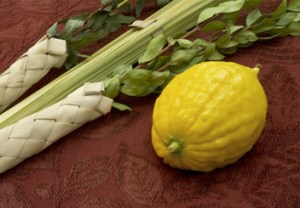
The other ritual objects traditional for Sukkot are the Lulav and Etrog. Each day during the week of Sukkot one holds the two together (see photo below) and shakes it in 6 directions, the 4 cardinal directions, up towards the heavens and down towards the earth. On the very last day one gets extra willow branches and beats them on the ground to simulate the sound of rain falling. From now on through the winter a prayer for rain is added to every service. It is supposed to rain on Wednesday. Today is the last day of this holiday and we spent some time buying tasty treats in one of my favorite places, Machane Yehuda. It really feels like harvest time there.
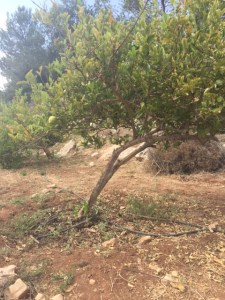
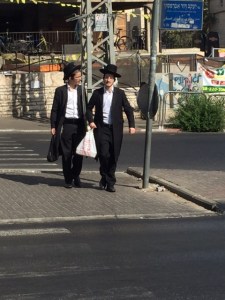
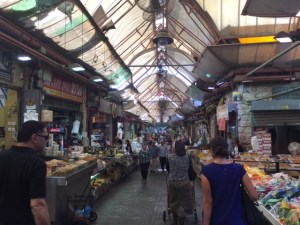
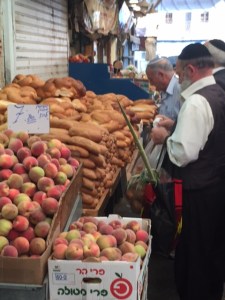
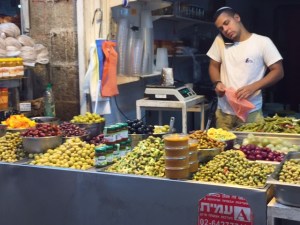
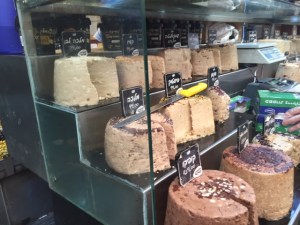
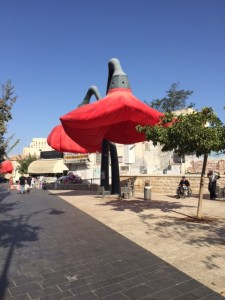
The lulav is made up of a palm branch (representing the spine), myrtle branches (representing the eyes), and willow branches (representing the mouth). The etrog is a citron that represents the heart.The etrog tree only grows in Israel and is quite thorny. You can see one on the tree at the lower left otherwise it’s been picked clean.Walking home you can see these two men have a tall plastic bag between them, that holds the lulav.Entrance to the Machane Yehudah market.Main corridor of the market with many lanes crisscrossing it.Here you can see the lulav sticking out of the shopping bag. We have seen people carrying them everywhere.Every type of olive you could imagine.Halvah, an acquired taste. Made from various nut butters and other added ingredients. Popular throughout the Middle East.My favorite tea and spice seller.Outside the market an unexpected Urban Art installation. Could not find the name of the artist but these red parachute figures blow up and then deflate.
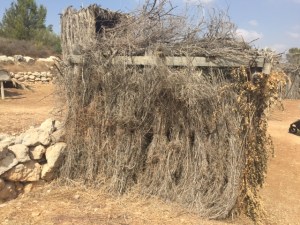
As I mentioned in my last post, the sukkah is the temporary hut for the holiday of Sukkot. We visited a park halfway between Jerusalem and Tel Aviv called Neot Kedumim, the Biblical Landscape Reserve. It is an attempt to recreate the landscape of biblical times. It was started in the 1920s and in 1999 won the Israel Prize. It is particularly popular this time of year for its special sukkah exhibit.
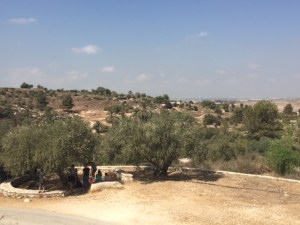
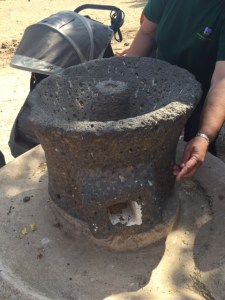
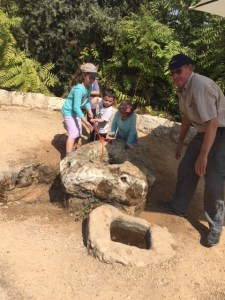
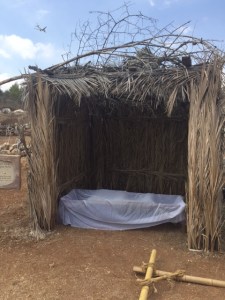
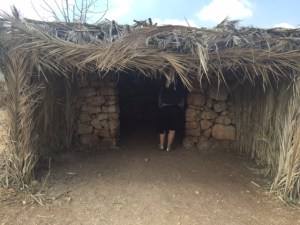
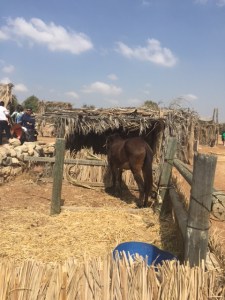
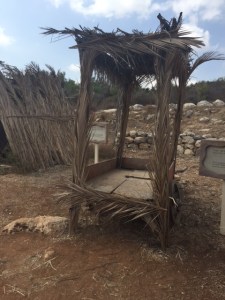
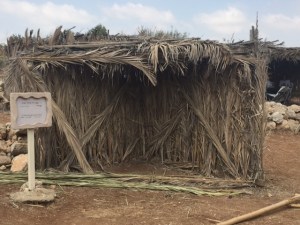
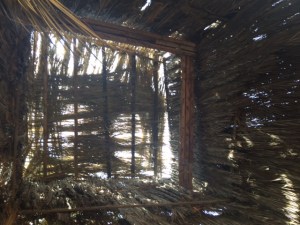
This gives you an idea of what the landscape looked like in biblical times. It hasn’t changed a whole lot since them. It has been quite hot here but is starting to cool down a little.An ancient grain mill that would have been turned by animals to grind the wheat into flour. The guide estimated this one from about 100 BCE.Some kids really got into grinding the wheat and hopefully none of their appendages.Olive trees have existed in this region for 1000s of years and are an important source of shade, food, and of course oil. This is obviously a more modern version where the olives are put into those special baskets and then pressed to release the oil.For this ancient one the kids tried to be the animals who would have turned the stone. Not too successful but they had a valiant try.We know how important water is in our part of the world but in this part of the world it’s even more precious. This is an example of an ancient well.The sukkah exhibit showed which types of sukkot are “kosher” (okay to use) and which ones are not okay. As I mentioned in my last post during the week of Sukkot one is supposed to sit in the sukkah for all meals. Here is a family enjoying a picnic in one of the “kosher” sukkahs.People also sleep in their sukkah.The front part of this sukkah is kosher but the back part (too permanent) is not.A sukkah with a donkey as one of it’s walls is not considered kosher. The donkey stood with his head through the hole the entire time we were there.But a sukkah on top of a camel is okay as long as the camel doesn’t travel anywhere during the proscribed festival days.One might think a sukkah on a cart is not okay because it is too portable but it counts as okay though the walls seemed too open to me.This one has no roof, or at least you can’t tell the walls from the roof and the sukkah must have at least three walls.This one only has two walls.This one is too tallLooking up through the roof of the too tall sukkah.This one was my favorite. I liked all the textures and it felt really cozy inside.Outside of my favorite one.
We are in Jerusalem at an especially meaningful time of the year. The Jewish High Holy Days have passed and the holiday of Sukkot is coming to an end tomorrow (has lasted 8 days) and the culmination will be a holiday called Simchat Torah, that ends the cycle of reading the torah. Sukkot has always been one of my favorite holidays since childhood. The holiday celebrates harvest time and people build a temporary structure called a sukkah which simulates the huts the Jewish people lived in when they wandered in the desert after leaving Egypt in biblical times. Families eat all their meals in the sukkah and often sleep in them as well. Sukkot is also one of three pilgrimage holidays in the Jewish calendar: Sukkot, Passover, and Shavuot. Pilgrimage was made to Jerusalem to the ancient temple.
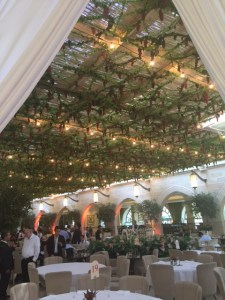
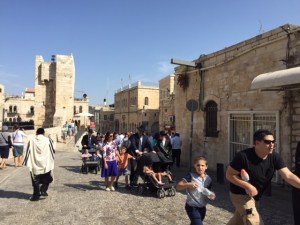
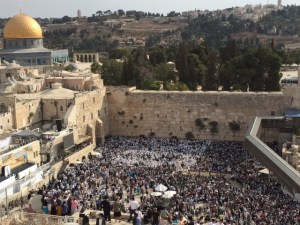
These are some of the sukkot (huts) on the balconies and on the street. If people don’t have a balcony their sukkah is in front and everyone has a designated spot. Our kids have a prime spot because the man who owns the apartment had a designated spot that they inherited with the apartment.Close up of one of the apartment buildings. One must be able to see the sky through branches on the top so one can’t be built under an overhang. Some are decorated elaborately inside. The one we had dinner in last night had chandeliers.If restaurants want business during the week of Sukkot they must have a sukkah for people to be served in as all meals must be eaten in the sukkah. This one is at the Waldorf Astoria Hotel and it’s inside but they have a glass roof so it “counts.”This period of time from New Years (Rosh Hashana) to Simchat Torah (beginning tomorrow) is a long vacation period in Israel for adults and children so the old city is particularly crowded.Alley in the old city of Jerusalem.Since this is a pilgrimage holiday a special blessing is recited at the Western Wall called the Birkat Ko’hanim (priestly blessing) and we were there for it. We were in an apartment that overlooks the Western Wall and you can also see the Temple Mount behind it. The Western Wall is the holiest site for Jews.In this close up you might be able to make out the line of people covered in prayer shawls closest to the wall. They are facing the people assembled and offering the special blessing.
We can always learn something new, and I’m always thrilled and a bit perplexed when I learn about something I knew nothing about before. So it was with the special exhibit at the Stedelijk Museum in Amsterdam. The exhibit was entitled “Zero” and chronicled the artists of an artistic movement of the 1950s and 1960s that saw themselves as a reaction to abstract expressionism. Many of the artists included in the exhibit are better known for other artistic movements such as Arte Povera, Minimalism, New Realism,Op Art, and Kinetic Art.
In manifestos published by the group it sought to eliminate color, emotion, and individual expression. You may be familiar with some of these artists though likely haven’t seen these particular works and will be seeing some more of their work as we progress to modern art in our class. Some of this may be difficult to accept but keep an open mind.
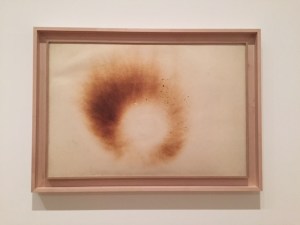
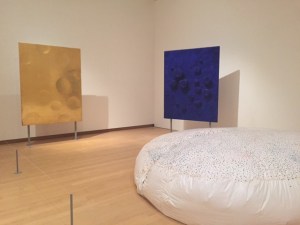
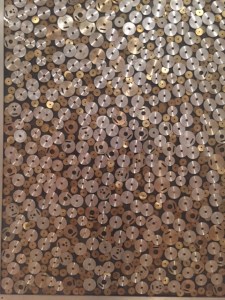
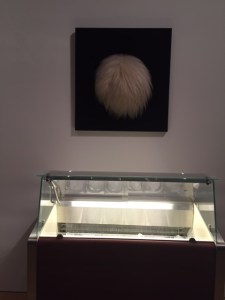
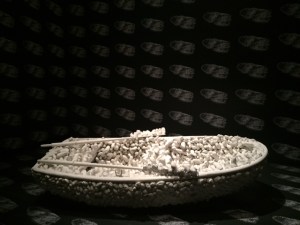
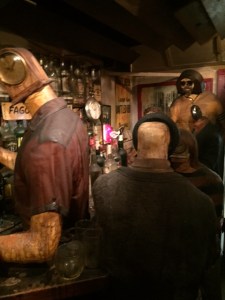
Yves Klein, Untitled Fire Painting, 1961. This work was accompanied by a video that showed the artist burning the work with a fireman spraying with a hose alongside.Mario Merz, “Unreal City”, 1969, metal, gauze, beeswax, neonYves Klein, Blue Painting, Gold Painting, Splattered cushion (not the title), 1962Arman, “Nuclear Particle”, 1964, gear wheels, plastic, woodSaburo Murakami, “Six Holes”, 1955, wood, paperHenk Peeters, “Ice. Polar Bear, Freezer #61”, 1961Carl Andre, “Bloody Angle”, 1985, Western Red CedarYayoi Kusama, “Aggregation 1000 Boats”, 1963, plastic, textile, leather, metal paintEdward Kienholtz, The Beanery, 1965Kienholtz, The Beanery, interiorKienholtz, The Beanery, interior
Got stuck in rush hour bike traffic last morning in Ghent on the way to the train station for our return trip to Amsterdam. On our last morning in Holland we stopped at the Stedelijk Museum of Contemporary Art. It too had major renovations and has incorporated the old building into a state of the art new wing.
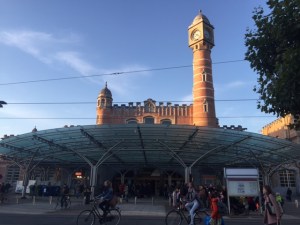
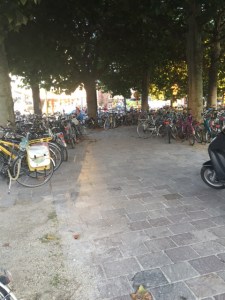
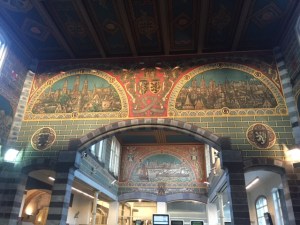
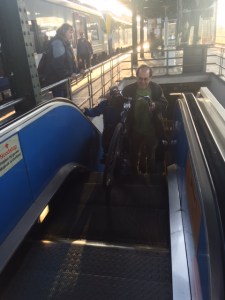
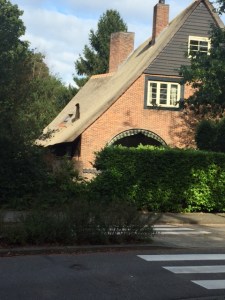
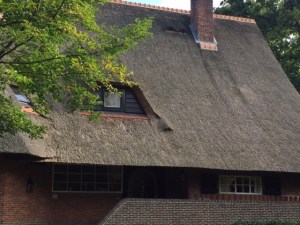
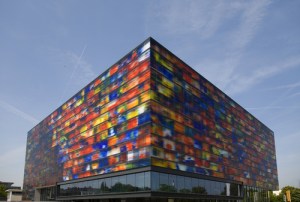
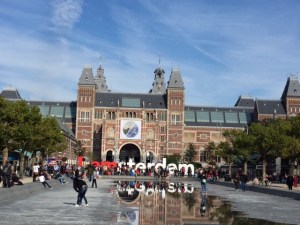
The old main train station in Ghent with a new entrance.Bicycle parking early in the morning from the commuter rush.Inside main hall of the ghent train station.We’ve seen some nice stations and it’s odd that one of the biggest (Amsterdam) is quite ugly on the inside though similar in architecture to the Rijksmuseum on the outside.Had to take the bikes up the escalator. Definitely not ADA compliant.Back in Bussum we walked past a private home that still has a thatched roof. Must be expensive to replace but so beautiful.There are fewer and fewer of these roofs but they are quite lovely. Hope people keep them up!On the way to returning our bikes we pass the Netherlands Institute for Sound and Vision, a stunning modern building.The new facade of the Stedelijk MuseumLooking from the entrance of the Stedelijk is a Richard Serra sculpture, the Van Gogh Museum, and the Rijksemuseum in the distance.Farewell to Holland and Europe (for now) to a very different world. On to Jerusalem.
The main attraction for art lovers in Ghent is the “Adoration of the Mystic Lamb” in St. Bavo’s Cathedral by Jan (and Hubert) van Eyck. If you want to see the work in a way that makes sense I will attach a link for you. The subject of this blog is what’s happened to this work over the years. If you are in the Renaissance to Contemporary class we have already spent some time studying the iconography and formal aspects of this work. The work was finished in 1432 and was a major shift from the stiff depictions of the Middle Ages to Renaissance humanism. It’s also the first work signed by Jan van Eyck though his brother had some hand in the work as well.
It’s actually quite amazing this work has survived at all given it’s been the victim of 6 thefts, probably the mot stolen painting in existence. In 1566 Protestant iconoclasts wanted to burn it though the priests had hidden it away. In 1794 Napoleon carried it off to the Louvre. In 1821 the king of Prussia tools several pieces to Germany. Those panels were so prized by the world community that the Treaty of Versailles (ended World War I) ordered Germany to return the panels. In 1934, someone broke into St. Bavo’s and stole the “Just Judges” panel which is still missing. It has an excellent copy in place until it can be found. In World War II the Allies Monuments Men were in the process of moving it for protection with it was intercepted by the Nazis who stored it in a salt mine until the end of the war. It’s now back in St. Bavo’s in a dark secured chapel.
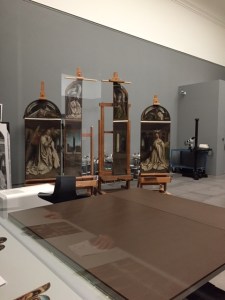
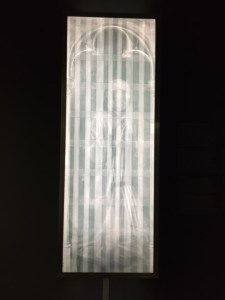
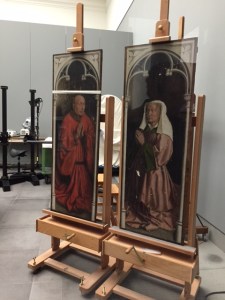
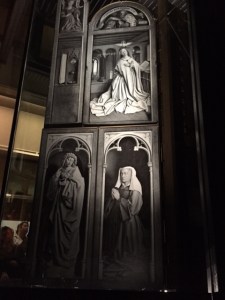
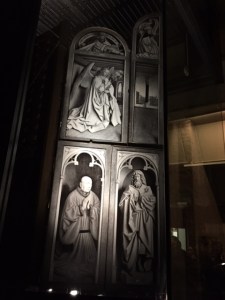
St. Bavo’s is a large Gothic cathedral built in 1350 on the site of an earlier structure dating to 942.The “Adoration of the Mystic Lamb” behind bullet proof glass with a limited number of visitors permitted entry. Restoration work is planned for the next few years to stabilize the condition of the altarpiece.In the 18th century two panels for Adam and Eve were substituted for the nude panels on the altarpiece. When they were returned to the altarpiece the reproductions were hung elsewhere in the cathedral.The altarpiece is in need of major restoration and the lab is at the Fine Arts Museum. Here you can see the panels that are in restoration at the moment.An xray for one of the patron panels.These are the two panels of the patrons for the altarpiece (they are on the closed side)The back side showing black and white photo images of the portions in restoration.Second side of front panel. These panels would be what you see when the altarpiece is closed though I don’t think it ever is now.
Ghent as I’ve said has a lively art scene and not as “local” as the art we saw in Bruges. We spent one full day exploring the city and found some unexpected inspiration. We started at the city museum and then the Museum of Fine Arts in the Ghent equivalent of Golden Gate Park. The rest of the day was spent wandering the squares and alleys of the historic district.
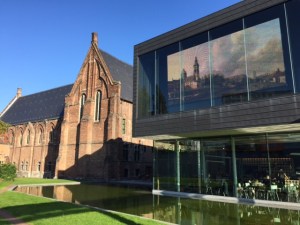
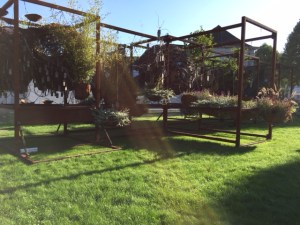
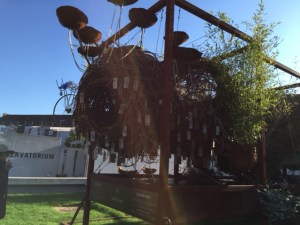
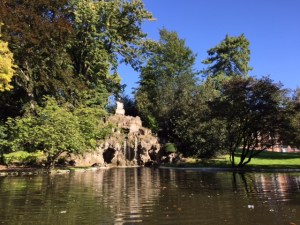
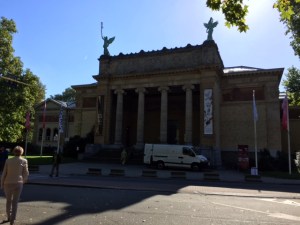
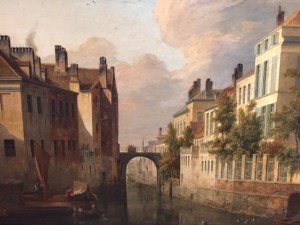
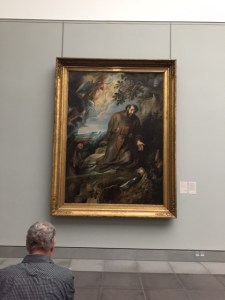
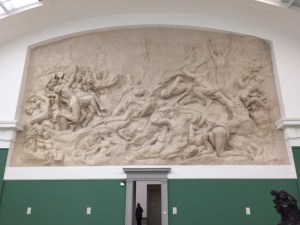
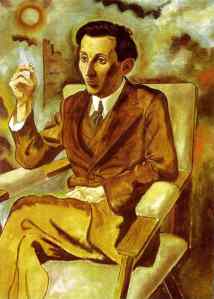
City Museum close to the university. The large screen is a slide show of historical images and personalities in the city’s long history. The museum is located in a converted 14th century abbey.Outside the city museum we found this environmental work titled “The Cocoon”Another view of “The Cocoon”Next stop was the Museum of Fine Arts in the Citadelpark, a beautiful oasis in the middle of the newer city otherwise a fairly nondescript place. This gazebo looks like it’s probably the site for summer concerts and gatherings.This manmade grotto reminds me of some of the ones you find in Golden Gate Park in San Francisco and even at Versailles.The Fine Arts Museum itself is a Neoclassical style building that contains a good collection of Northern European art including artists from countries outside of Belgium as well.View of St. Bavo’st, Pierre Noter, Dommerson, 19th centuryA View of Ghent by Pieter Dommerson, 19th centuryHeymans (Dutch artist), “Sunset on the Heath”, 1877Rubens, “St. Francis of Assisi”. For those of you who have looked at Rubens work this gives you an idea of the scale of his work.“Human Passions”, Jef Lambeaux, 1877, was controversial about the way figures were portrayed and commission not accepted. Plaster cast ended up in the museum.Paula Modersohn Becker, “Girl in Birch Forest”, 1903. An artist whose work you don’t get to see too often. A nice surprise to see this one.James Ensor, “The Skeleton Looking at Chinoiseries”, 1885Max Ernst, “Vegetation”, 1925George Grosz. “The Author Walter Mehring”. Both Mehring and Grosz were socialists, dadaists, and rebels.Art Nouveau pastel, Fernand Khnopff, “Incense”, 1898. This work was a real surprise, never heard of the artist but the work and the frame were quite beautiful.Detail of fabric from pastel “Incense”
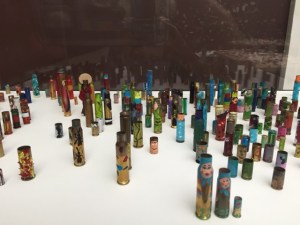
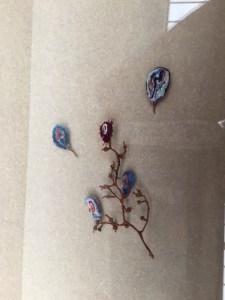
The most interesting work in the museum was a room dedicated to a group calling themselves Micromuseum. These two young Russian artists were in residence at the museum for 2 months and repurposed old and simple materials into works of art. These are painted bullet casings.Repurposing the stems from a cluster of grapes using twined fabric.The community was invited in to create from lots of materials made available to them- here shards of glass and pottery.Gunshell crittersMy favorite- the gunshell forest
The city of Ghent (with a guttural Gh or French version is Gent) is very different from Bruges in some ways and the same in some ways. Both cities were prosperous in the Middle Ages from trade in textiles and both went into decline though Ghent remained a “living” city while Bruges became a jewel box for tourists. It might be hard to image but Ghent was at one time the largest city in Europe. It really is a living city with a university, lots of young people, and seems to have a bit more grittiness than Bruges.
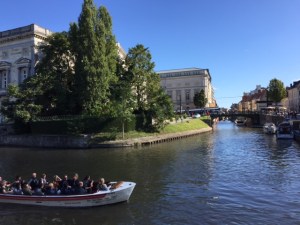
The Korenmarkt, one of several squares in the city each one specialized in a different kind of commerce. Today all home to shops and restaurants.The city is at the confluence of two rivers so moving bodies of water with lots of boat traffic (business as well as pleasure).Where the two rivers (the Leie and the Scheldt) meet. The large buildings you see are government buildings I think.The Castle of Counts built in 1180 not to protect the people of Ghent but to intimate them as they were fairly independent minded. At the time it was outside the city walls, now it’s in the center of the historic district.There are several major churches built during Ghent’s most prosperous time. One the Cathedral of St. Bavo will be the subject of the next post as it is home to the most important work of art in Ghent, van Eyck’s “Mystic Lamb” altarpiece.Another square in the district of the cathedral is a gathering place for visitors and locals alike.
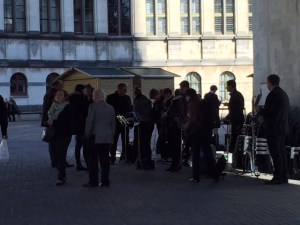
Th University of Gent is the largest in Belgium and lends a liveliness to the city. The arts seem to play a prominent role.This shelter or band shell in the midst of the churches is an interesting construction and has incredible acoustics. As we wandered by there was a great quartet playing.The quartetAs they played a whole other group of musicians showed up to play after them.
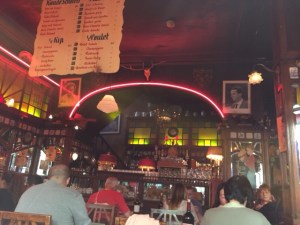
One of these buildings had the date of 1669 on the facade. They are at the entrance to the Patershol neighborhood that used to be pretty down and out and now boasts lots of interesting shops and restaurants.A typical restaurant establishment in Patershol. Hanging down is an old menu in Flemish and French showing us the division in this country between the Flemish speaking north and the French speaking south. The prices are in francs. At either end of the neon are portraits of the king and queen.Next blog post will include works from the Fine Arts Museum and you’ll see some paintings of Ghent that look as if they are still the same.
We departed from Bruges and had a fairly uneventful day bicycling through the Belgian countryside from Bruges to Ghent, a trip of about 26 miles. We only had a few backtracks and most of the way we were one a separate bike trail separated from the road by a designated lane for bikes, one for walkers, and and often a barrier, hedges, or along a canal. It was a lovely day and a fun way to travel through the country.
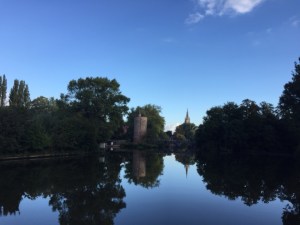
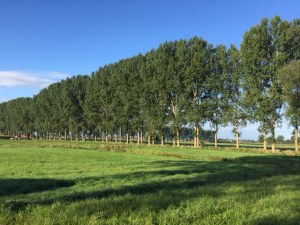
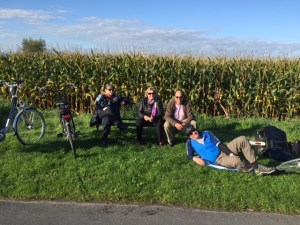
As we said goodbye to Bruges this is the view on our way out of town. Such a beautiful jewel box like place.Beautiful and green and flat!Bunkers left from World War I and World War II are now home to various animals especially bats. Belgium saw some of the bloodiest battles of both wars (Arden and Flanders Field) though you’d never know it from the peaceful countryside.A good portion of the way we traveled along canals dug in the 18th century as Belgium was the second country to industrialize after England in the Industrial Revolution. We saw a few barges still delivering goods to small villages and towns.Here’s the group stopping for the first break.
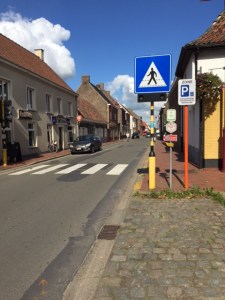
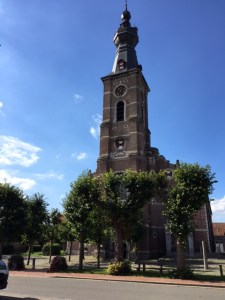
A small village along the way was our lunch stop.Village church










































 Poetry Without Words